
BEST LANGUAGE LEARNING
APPS — 2026_
We built Allomorpheus because every app we tried was missing something. Here is an honest comparison of the 10 best language learning apps of 2026 — what each one does well, where it falls short, and what it actually costs.
7 days free — no credit card required
THE COMPARISON
> Honest pros and cons. No sponsored placements.
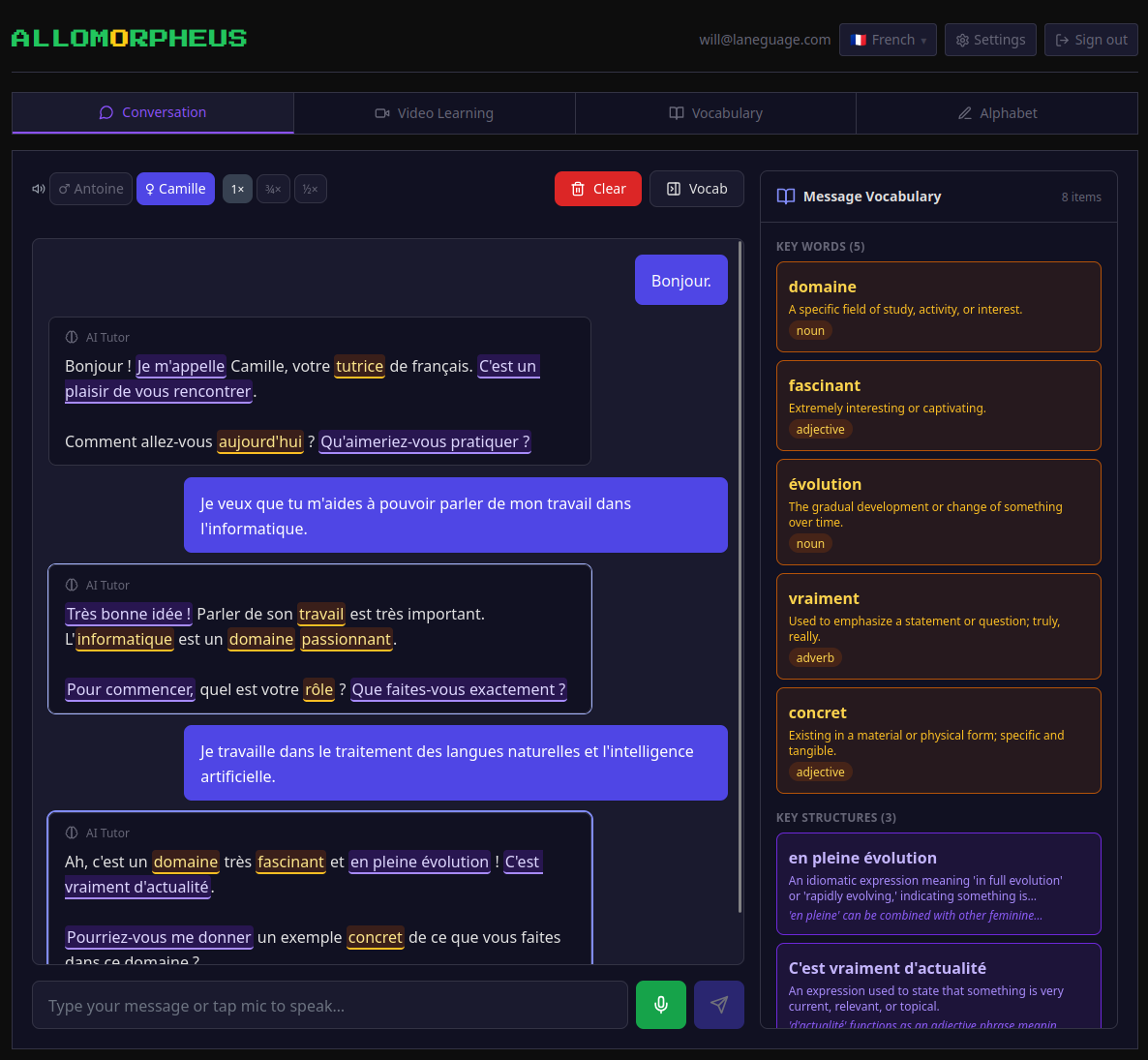
Allomorpheus
AI + structure + Anki | $8.25–$15/mo
✓ PROS
- ★AI conversations from your vocabulary
- ★One-click Anki export
- ★Grammar lessons from real mistakes
- ★No gamification
✗ CONS
- ✗Newer platform (smaller community)
- ✗Requires some self-direction
Best for: Serious learners who want structure and AI immersion
Duolingo
Gamified lessons | Free / $7–$14/mo
✓ PROS
- ★Free tier available
- ★Huge content library
- ★Game-like engagement
✗ CONS
- ✗Shallow grammar
- ✗Pre-packaged lessons
- ✗Gamification over real use
- ✗Limited conversation practice
Best for: Casual learners who want daily bite-sized practice
Babbel
Structured courses | $7–$14/mo
✓ PROS
- ★Good grammar coverage
- ★Professional content
- ★Speech recognition
✗ CONS
- ✗Pre-defined curriculum
- ✗Limited AI conversation
- ✗No Anki integration
- ✗Rigid lesson structure
Best for: Beginners who want a guided course experience
Anki
Spaced repetition flashcards | Free
✓ PROS
- ★Free
- ★Open-source
- ★Incredible flexibility
- ★Best retention method
✗ CONS
- ✗Manual card creation is tedious
- ✗No AI tutor
- ✗No conversation practice
- ✗Steep learning curve
Best for: Self-directed learners who build their own decks
Memrise
Native-speaker video + SRS | Free / ~$8–$15/mo
✓ PROS
- ★Real native-speaker video clips
- ★Built-in spaced repetition
- ★Great for listening to real speech
- ★Free tier
✗ CONS
- ✗Vocabulary-first, shallow on grammar
- ✗No live conversation practice
- ✗Course quality varies by language
Best for: Learners who want authentic native audio with SRS drills
Pimsleur
Audio-first speaking method | ~$15–$21/mo
✓ PROS
- ★Speaking from lesson one
- ★Excellent pronunciation drilling
- ★Hands-free — works on commutes
- ★Structured 30-minute daily lessons
✗ CONS
- ✗No reading or writing instruction
- ✗Rigid, zero personalization
- ✗Per-language subscriptions add up
- ✗No SRS or vocabulary export
Best for: Auditory learners and travelers who need speaking confidence fast
Rosetta Stone
Immersive legacy courses | ~$8–$16/mo
✓ PROS
- ★Polished, consistent courses
- ★Pure immersion methodology
- ★Built-in speech recognition
- ★Wide language catalog
✗ CONS
- ✗No explicit grammar explanations
- ✗Slow, repetitive pacing
- ✗Feels dated next to AI tutors
- ✗No conversation practice or SRS export
Best for: Learners who prefer pure immersion without translation
italki
Marketplace of human tutors | Pay per lesson (~$5–$30/hr)
✓ PROS
- ★Real human tutors at every price point
- ★1-on-1 conversation from day one
- ★Flexible scheduling
- ★Community corrections
✗ CONS
- ✗Cost compounds with regular lessons
- ✗No built-in curriculum
- ✗Self-managed vocabulary review
- ✗Quality varies by tutor
Best for: Learners who want live human conversation and can budget for it
Speak
AI speaking drills | Free trial / ~$8–$20/mo
✓ PROS
- ★High volume of speaking repetitions
- ★Instant AI feedback
- ★Modern, focused UX
✗ CONS
- ✗Speaking drills only — narrow scope
- ✗Little grammar or vocabulary structure
- ✗Small language catalog
- ✗No SRS or Anki export
Best for: Beginners who want pronunciation reps with an AI
Langua
AI conversation + immersion content | ~$14–$30/mo
✓ PROS
- ★Natural AI conversations with voice
- ★Curated story and immersion content
✗ CONS
- ✗No built-in Anki export
- ✗Saved words do not enter an SRS lexicon
- ✗Limited writing-system support
- ✗Smaller platform overall
Best for: Learners who want casual AI chat without a review workflow
THE VERDICT
If you want a quick daily habit, Duolingo is fine. If you want a structured curriculum with solid grammar, Babbel delivers. If you want hands-free speaking drills for a commute, Pimsleur still works. If you want real humans, nothing beats italki. And if you are a self-starter who builds their own study system, Anki is essential.
But if you want all of the above — AI conversation, personal vocabulary, Anki language learning export, grammar from real mistakes, and no gamification — then Allomorpheus is the only tool that combines them. It is not a replacement for discipline. It is a replacement for the friction that kills discipline.
BEST LANGUAGE APP BY BUDGET
> Free, budget, and premium picks — prices as of late 2026.
Best free language app
Anki + the Duolingo free tier
Anki is free, open-source, and still the gold standard for retention. Pair it with the Duolingo free tier for a daily habit — and expect to supply your own content and discipline. Allomorpheus also starts with a 7-day free trial, no credit card.
Best budget app (under $10/mo)
Allomorpheus · Memrise
Under ten dollars a month you should already expect real conversation practice. Allomorpheus ($8.25/mo billed yearly) adds AI conversation, auto-built flashcards, and Anki export; Memrise adds native-speaker video with spaced repetition.
Best premium app
Pimsleur · italki
Premium budgets buy structure and humans: Pimsleur for hands-free audio drilling, italki for live 1-on-1 tutors. Worth it when you will actually use them daily — otherwise a budget AI + SRS combination compounds faster.
THE BEST LANGUAGE APP FOR MUSIC LOVERS
Learning through music is one of the most underrated routes to comprehension: real speech, real emotion, and repetition you actually enjoy. Allomorpheus is the only app in this comparison built around music videos with synced lyrics — you study a song, pull vocabulary straight into spaced repetition, and then talk about it with your AI tutor.
See it in action: learn Japanese with music · learn Spanish with music · how to study languages with music videos
DUOLINGO ALTERNATIVES FOR SERIOUS LEARNERS
If you have outgrown streaks and hearts, the 2026 alternatives split three ways: structure (Babbel), humans (italki), and AI + spaced repetition (Allomorpheus, Speak). For a full side-by-side, read our honest Allomorpheus vs Duolingo comparison — and if you are weighing AI tutors specifically, Allomorpheus vs Langua.
CHOOSING A LANGUAGE APP: FAQ
> Quick answers
What is the best language learning app in 2026?
It depends on your goal. Duolingo for a free daily habit, Pimsleur for hands-free speaking drills, italki for live human tutors, Anki for maximum retention per dollar, and Allomorpheus if you want AI conversation, auto-built flashcards, and Anki export in one place. For most serious self-learners, an AI conversation app paired with spaced repetition compounds fastest.
Are premium language apps worth it?
Only if you will use them near-daily. Premium budgets buy structure (Babbel), humans (italki), or polished audio drilling (Pimsleur). A budget combination of AI conversation plus spaced repetition usually beats an unused premium subscription, because consistency is what produces fluency.
What is the best language app on a budget?
Anki is free, open-source, and still the gold standard for retention. The Duolingo free tier adds a daily habit. Under $10/mo, Allomorpheus ($8.25/mo billed yearly, 7-day free trial) adds AI conversation and auto-built cards, and Memrise adds native-speaker video with spaced repetition.
Is there a language app for learning with music?
Yes. Allomorpheus is built around music videos with synced lyrics: you study a song, pull vocabulary directly into spaced repetition, and then use those words in AI conversation. It is the only app in this comparison with music study as a core feature.
What are the best Duolingo alternatives for serious learners?
Babbel for structured grammar, italki for live human tutors, Speak for AI pronunciation drills, and Allomorpheus for AI conversation combined with spaced repetition and one-click Anki export. If streaks and hearts stopped teaching you, pick based on whether you need structure, humans, or output practice.
TRY THE DIFFERENCE
7 days free. No credit card. See how AI + structure + Anki changes everything.
START FREE TRIAL> Related: Anki language learning | AI language learning | AI language speaking practice | Spanish apps | Japanese apps | Platform overview | what language should I learn quiz